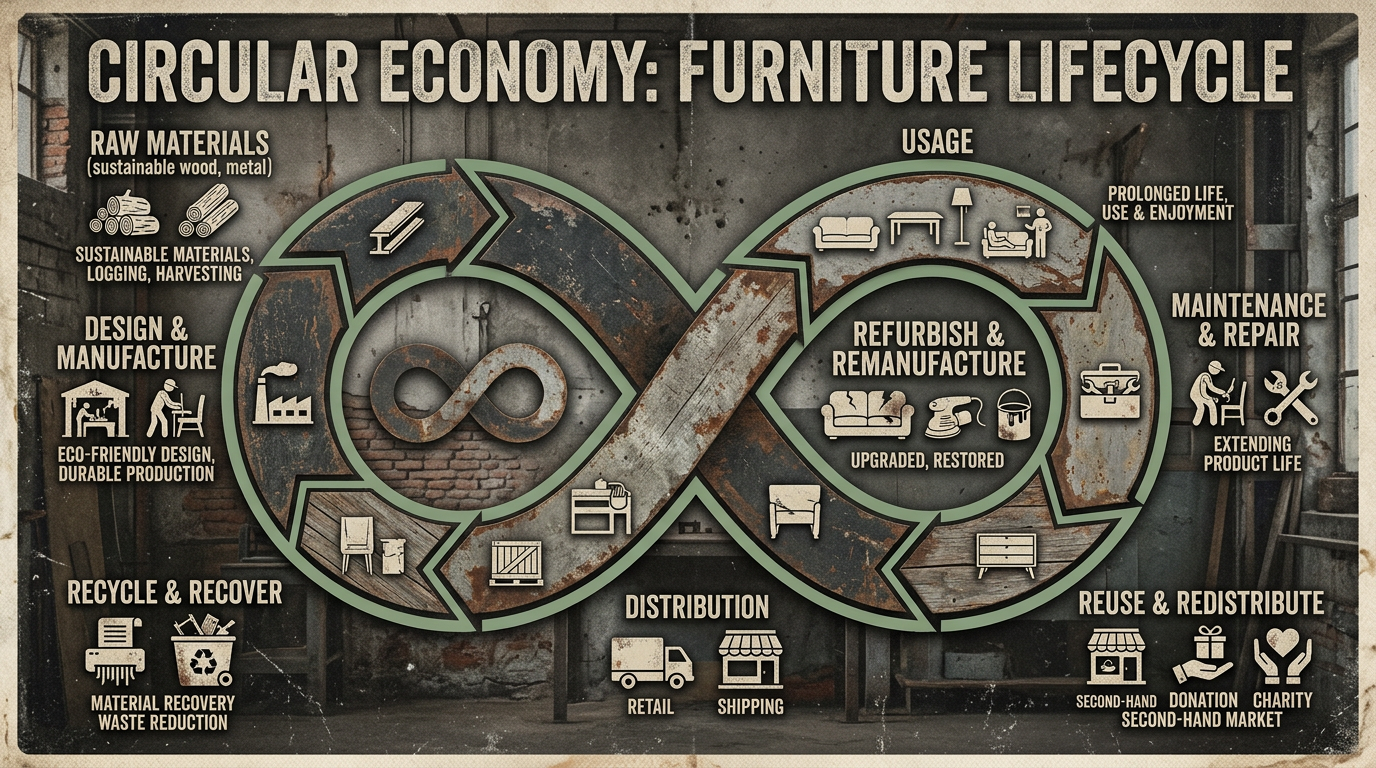
Two Ways to Run an Economy
Linear Economy (Take-Make-Waste): Extract raw materials → Manufacture → Use → Discard → Repeat. Products are used once, then gone.
Circular Economy (Closed Loops): Design for longevity → Use → Repair/Refurbish → Recover materials → Feed back into production. Nothing is wasted.
Real example: Patagonia's Worn Wear program buys back used gear, repairs it, and resells it — keeping materials in play instead of the landfill.
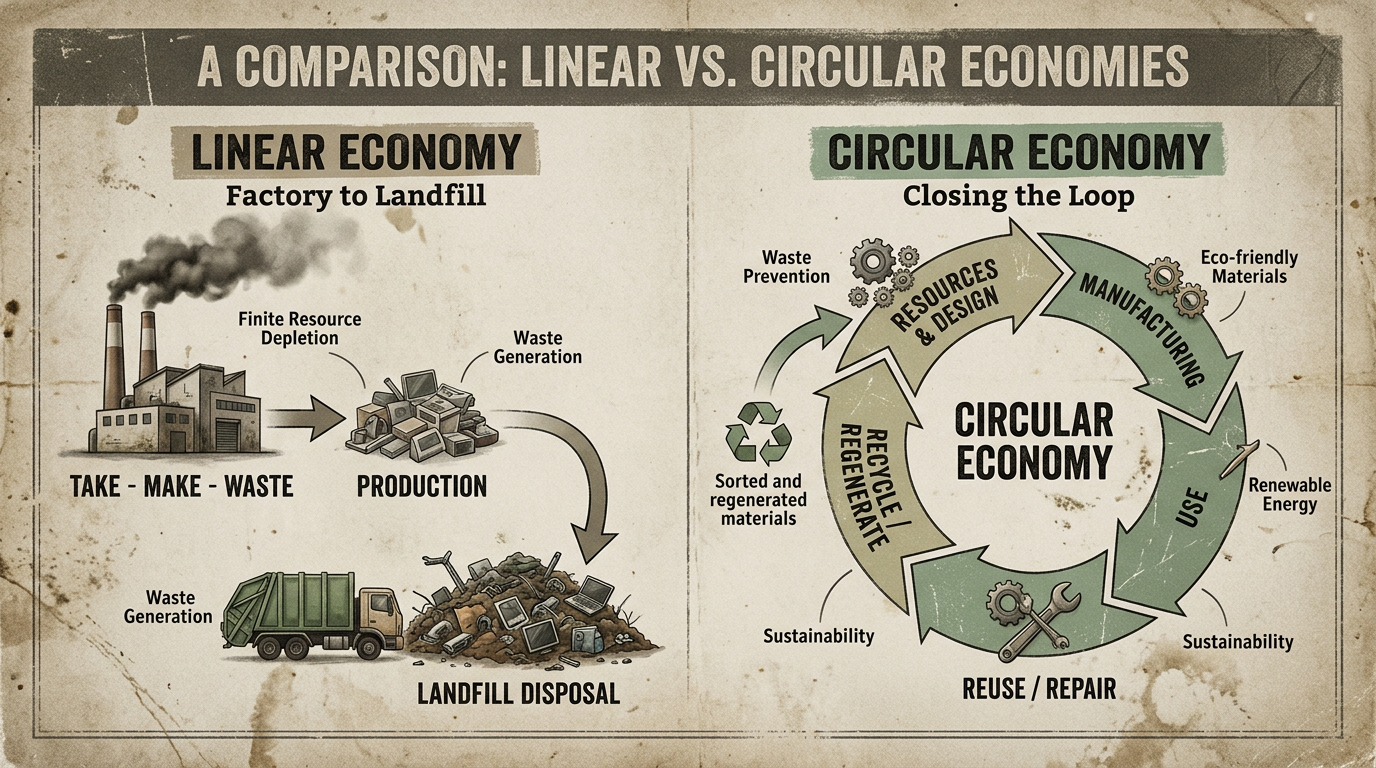
Linear vs Circular Economy comparison diagram
There Is No "Away"
When you throw something out, it doesn't disappear. It ends up somewhere physical:
Landfill: Buried underground, takes decades to centuries to decompose, leaches chemicals into groundwater, generates methane.
Incinerator: Burned for energy recovery — but produces air pollution and toxic ash, and loses materials forever.
Ocean/Environment: 8+ million tons of plastic enter oceans yearly. Microplastics are now found in rain, soil, and human blood.
Recycling: Only works for certain materials, degrades quality each cycle (downcycling), and many "recyclables" still end up in landfills.
The circular economy isn't just recycling — it's a complete redesign of material flows.
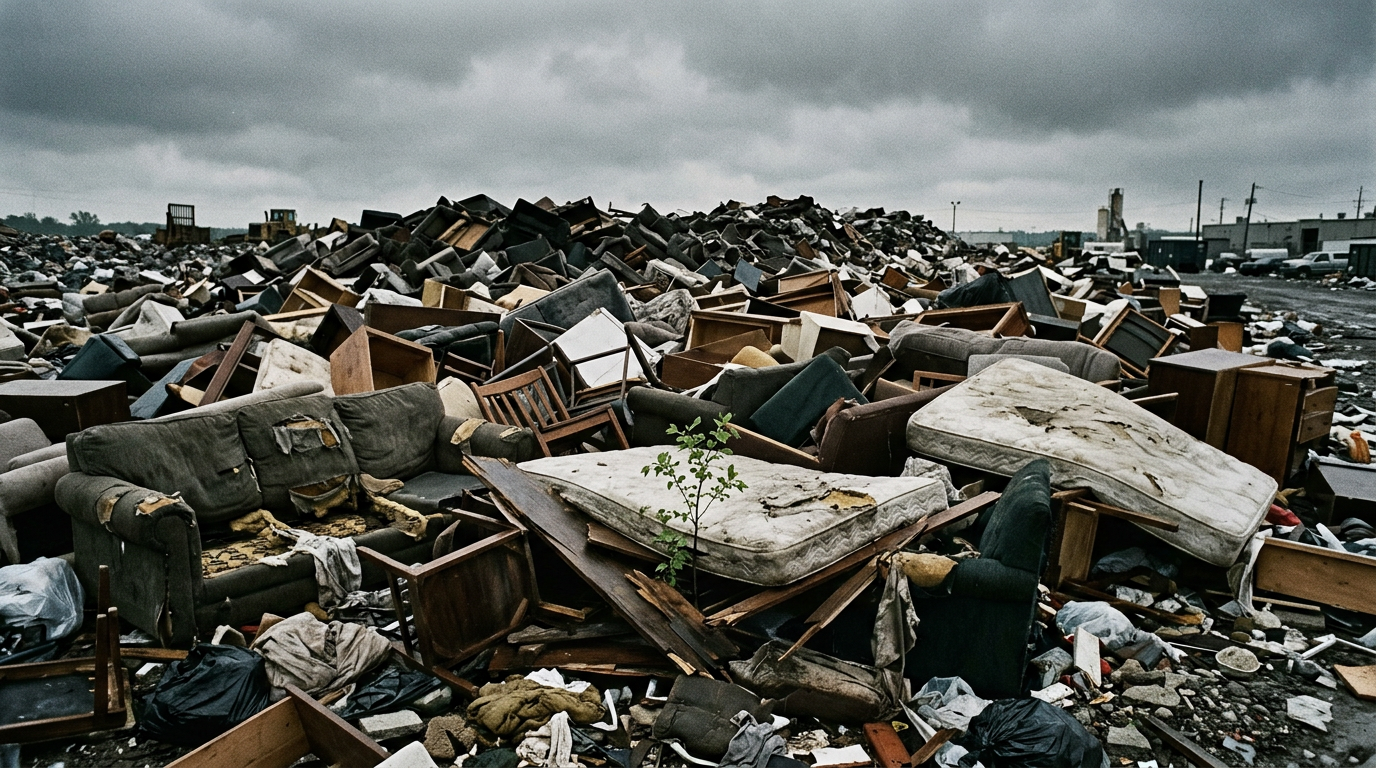
Landfill overflowing with discarded furniture
Design for Longevity
Planned obsolescence: Products are intentionally designed to fail or become outdated quickly, forcing you to buy new ones.
Examples: Phone batteries glued in. Washing machines with plastic gears designed to break in 5 years. Fast fashion clothing falling apart after 10 washes. Software updates slowing older devices.
- Circular design principles:
- Durability — quality materials and construction
- Modularity — individual parts replaceable
- Repairability — access to tools, parts, and instructions
- Upgradability — swap components instead of whole products
- Timeless design — won't appear outdated quickly
Real examples: Fairphone (modular smartphone), Buy It For Life products (cast iron pans, quality boots), Right to Repair laws.
Repair Culture
For most of human history, repair was normal. The throwaway economy is a recent invention.
Repair Cafés: Free community events where volunteers help fix items — electronics, clothing, furniture, bikes. No appointment, no cost, just knowledge transfer.
Right to Repair Movement: Laws requiring manufacturers to sell parts and publish repair guides. Fighting monopolies on repair (Apple, John Deere, and others have fought these laws hard).
Skills worth learning: Basic sewing. Electronics troubleshooting. Small engine maintenance. Furniture refinishing.
Every repair is a small act of rebellion against the linear economy. It saves money, builds skills, and keeps materials in use.
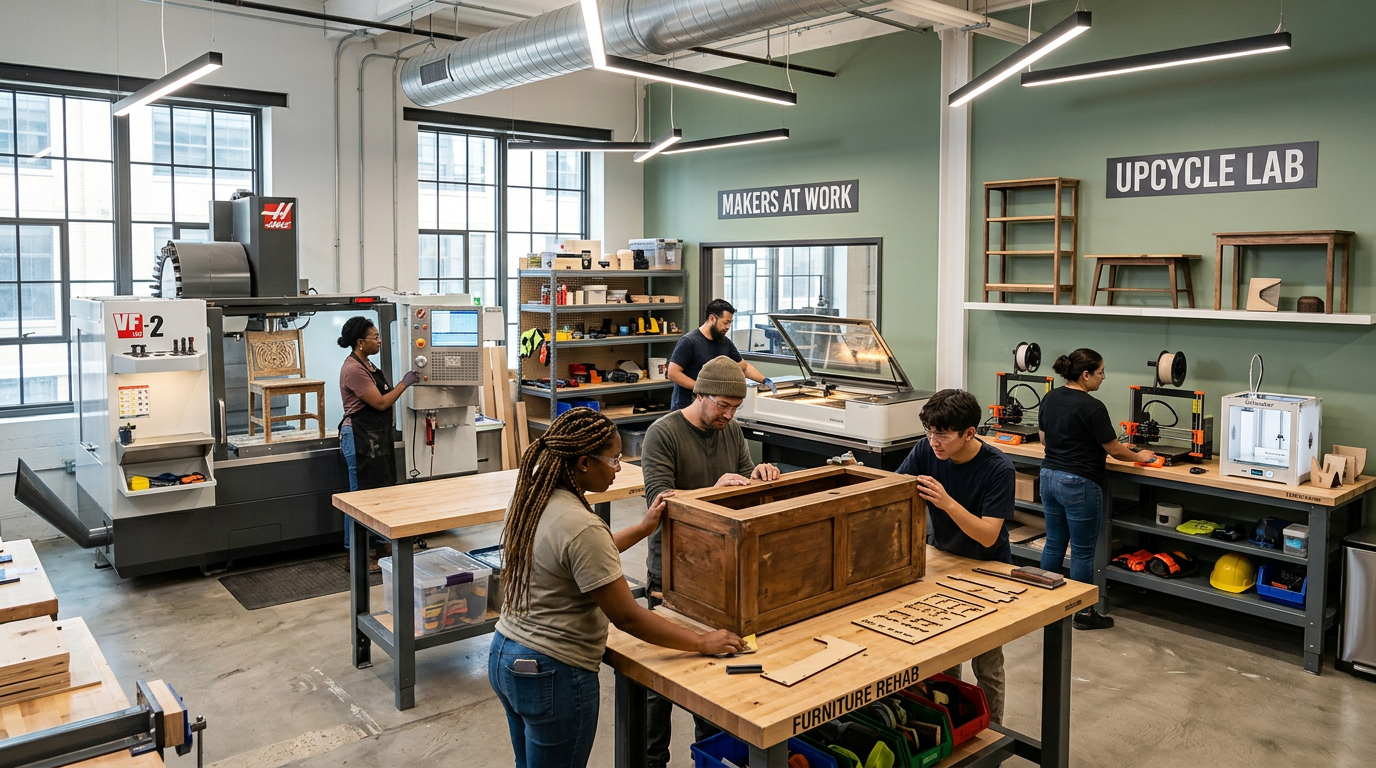
Modern community makerspace with high-tech equipment
Sharing Economy: Access Over Ownership
The average power drill is used for 13 minutes in its entire lifetime.
That's not a drill problem — that's an ownership model problem.
- Sharing models that work:
- Tool libraries — borrow tools like library books
- Car sharing — Zipcar, Turo, Getaround
- Clothing rental — Rent the Runway, Nuuly
- Equipment rental — party supplies, camping gear, REI Co-op
- Buy Nothing groups — neighborhood gifting via Facebook
The shift: from "Do I own it?" to "Can I access it when I need it?"
Higher utilization means fewer products manufactured, fewer resources extracted, less waste.
Material Recovery Hierarchy
Not all recovery is equal. The hierarchy, from best to worst:
- Reuse — use as-is, no reprocessing needed
- Repair — fix what's broken, keep function intact
- Refurbish — restore to working condition
- Remanufacture — disassemble and rebuild to original specs
- Recycle — break down into raw materials
- Downcycle — recover lower-quality materials
- Energy recovery — burn for electricity (last before landfill)
- Landfill — failure mode
The goal: keep materials in the highest-value state possible for as long as possible.
Fun fact: 75% of all aluminum ever produced is still in use today.
Local Loops Are Stronger
Global supply chains are fragile. COVID proved that.
Local circular systems are more resilient, create local jobs, and keep value in the community.
- Sacramento examples already running:
- Repair Café movement
- Community composting programs
- Buy Nothing groups (neighborhood gifting)
- Habitat ReStore (building materials diversion)
- Local thrift stores and Upcycle Hub
- Sacramento Maker Space (shared tools, material transformation)
You don't need a global system to participate. Start with your block.
Your Daily Choices
- Before you buy:
- Do I need to own this, or can I borrow/rent?
- Is there a used or refurbished version?
- Is it built to last?
- Can I repair it when it breaks?
- When something breaks:
- Can I fix it myself?
- Can I take it to a repair café?
- Can I find a local repair shop?
- Only replace if truly beyond repair.
- When you're done with it:
- Can someone else use it?
- Can it be repaired and resold?
- Can the materials be recovered?
- Trash is always last resort.
Impact math: Fix a toaster → $30 saved, 10 lbs of e-waste avoided. Buy used jeans → $40 saved, 1,800 gallons of water saved.
Small actions aggregate into system change.