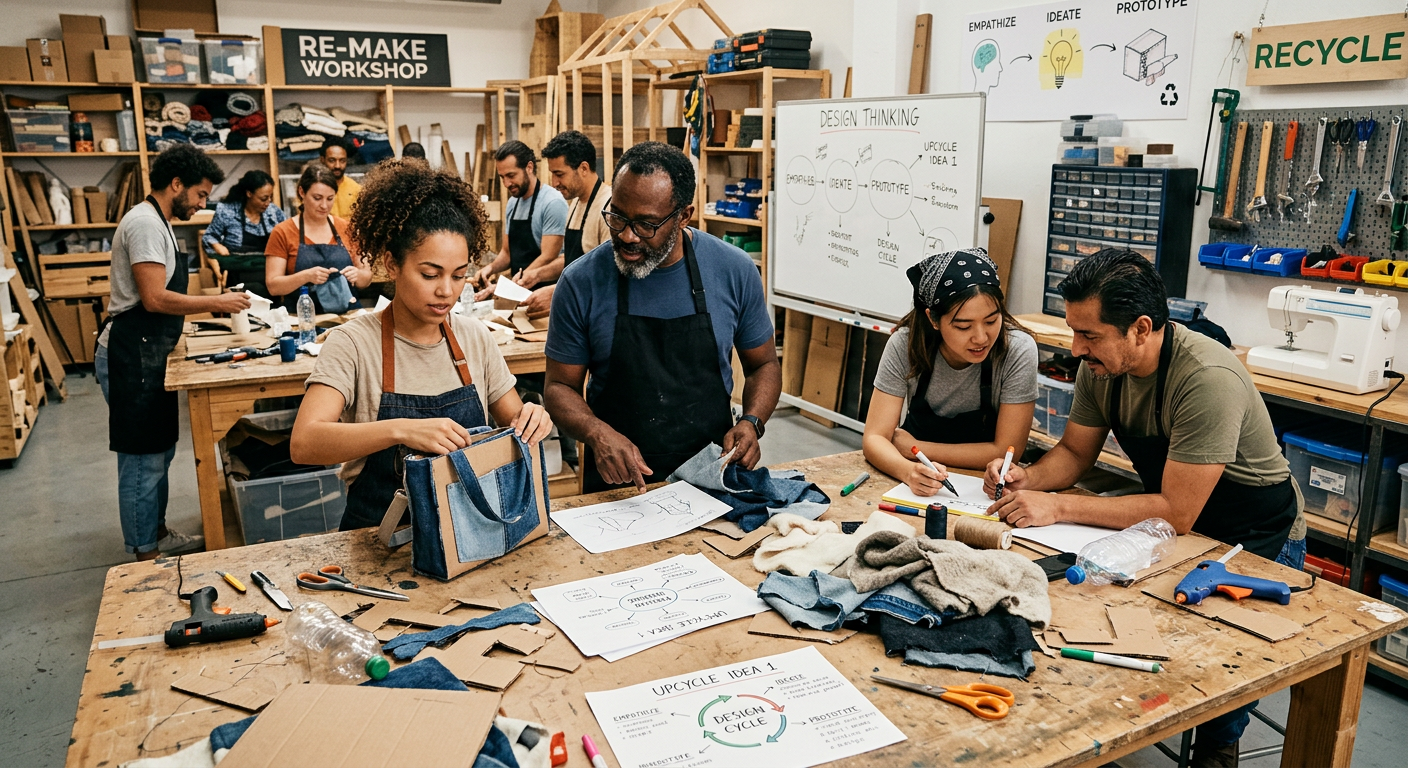
What is Upcycling?
Upcycling transforms discarded materials into products of higher value. Unlike recycling which breaks down materials, upcycling preserves and enhances them. Examples: turning pallets into furniture, old t-shirts into bags, wine bottles into lamps.
Upcycling vs Recycling vs Downcycling
Upcycling: Increases value (glass bottles → art) Recycling: Maintains value (paper → new paper) Downcycling: Decreases value (plastic → lower-grade plastic)
Upcycling often requires more creativity but less energy than recycling.
The Design Thinking Process
- Empathize: Understand the problem and materials
- Define: What could this become?
- Ideate: Brainstorm possibilities
- Prototype: Build a rough version
- Test: Does it work? Iterate.
Reimagining Waste
Every discarded item is raw material waiting for transformation. Before throwing something away, ask: What else could this be? Old jeans → planters. Cardboard boxes → organizers. Broken furniture → new furniture.
The Trash Island Challenge
Design exercise: Gather 5 items headed for the trash. Spend 10 minutes sketching what they could become together. Build a rough prototype. Share your creation and explain its purpose.
Everyday Upcycling Ideas
• Glass jars → storage containers • Old ladders → bookshelves • Tin cans → planters • Wooden pallets → garden furniture • Fabric scraps → quilts or bags • Wine corks → bulletin boards
Connecting to Circular Economy
Upcycling is part of the circular economy. Instead of take-make-dispose, we keep materials in use longer. Every upcycled item is one less in the landfill and one less newly manufactured.
Your Action Plan
- This week:
- Set aside 3 items before throwing them away
- Spend 5 minutes brainstorming what they could become
- Try one simple upcycling project
- Share what you made (or learned)