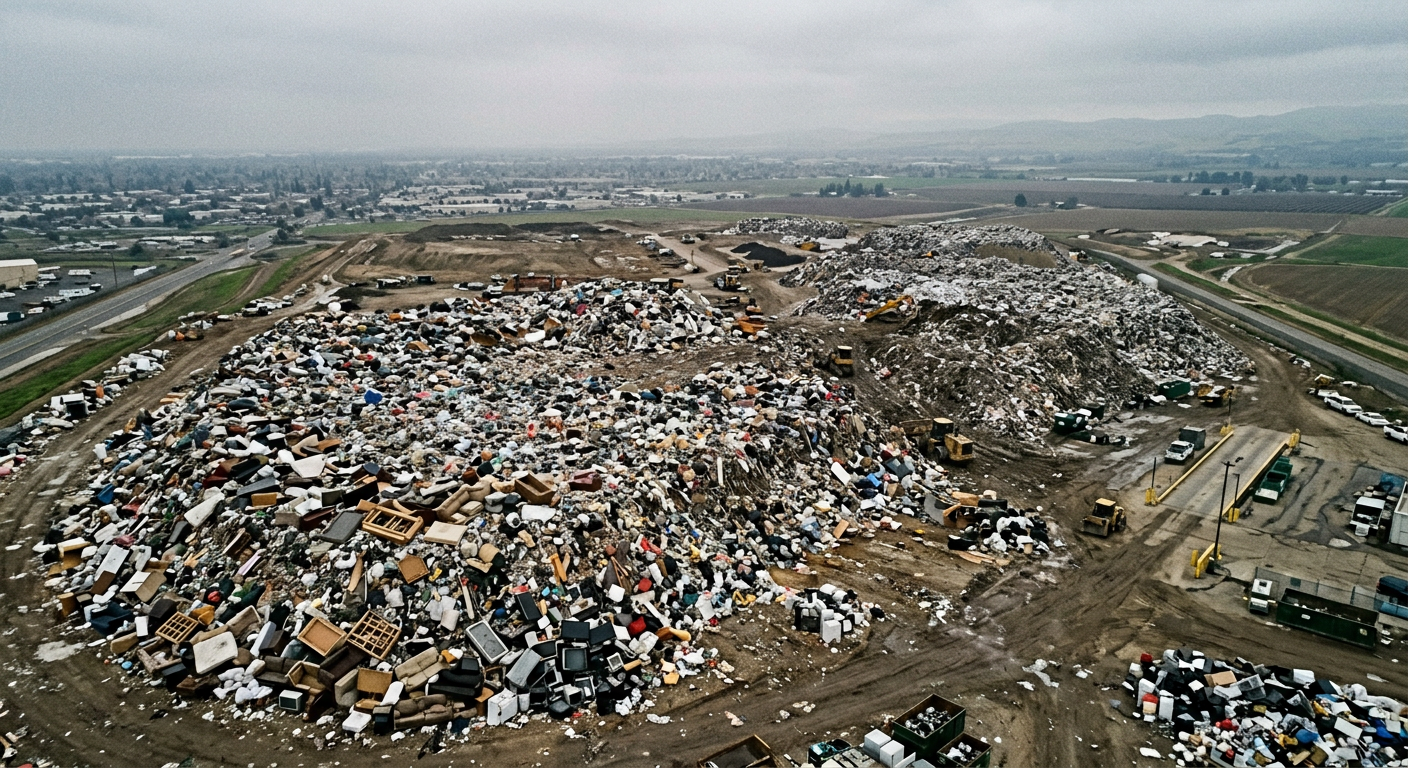
What Is a Routing Cascade?
The decision hierarchy for every item
A routing cascade is a decision-making system that evaluates items from best outcome to worst, stopping at the first viable option.
Think of it like a waterfall — items "flow" down through levels until they find the right match. The goal is to catch them as high up as possible.
- The 5 levels (best to worst):
- Reuse As-Is — Keep it in use exactly as it is
- Repair & Restore — Fix it, extend its life
- Repurpose — Give it a new use
- Recycle — Break it down, make something new
- Responsible Disposal — When nothing else works
Why this order? Each step down the cascade requires more energy, resources, and intervention. Reuse preserves the most value with the least impact. Disposal is the last resort.
Carl's job: Evaluate every item and route it to the highest viable level. Your job: Give Carl the information to make the best decision.
Level 1 — Reuse As-Is
The best outcome: keep it in use
What it means: The item works as intended. Someone else can use it immediately without modification.
- Examples:
- Working appliances (toaster, microwave, blender)
- Clothing in good condition
- Books, toys, dishes
- Furniture that's structurally sound
- Electronics that power on and function
- Why it's the best:
- Zero additional energy or resources required
- Item retains full functional value
- Immediate benefit to recipient
- Extends product lifespan years or decades
- Keeps items out of waste stream longest
What Carl looks for: Condition notes like "works," "excellent condition," "like new" — photos showing intact, clean items — no mention of damage or defects — functional descriptions: "powers on," "no cracks," "clean"
Your role: Test items before listing. Clean them thoroughly. Note any minor cosmetic issues (but functional). Take clear photos showing condition. Be honest — it helps Carl route accurately.
Level 2 — Repair & Restore
Fix it, extend its life
What it means: The item is broken or degraded but can be restored to working condition with reasonable effort.
- Examples:
- Furniture needing refinishing
- Appliances with minor mechanical issues
- Electronics with broken screens or dead batteries
- Clothing needing mending
- Items with missing parts that can be replaced
- Why it matters:
- Saves items from disposal
- Often cheaper than buying new
- Preserves craftsmanship (especially vintage items)
- Creates repair/refurbishing jobs
- Teaches maintenance skills
What Carl looks for: Specific damage description ("broken hinge," "dead battery") — photos showing the damage clearly — high-quality construction worth repairing — parts availability — repair complexity vs. item value
Partner network: Carl routes repair candidates to local repair cafes, refurbishing social enterprises, electronics repair specialists, and furniture restoration workshops.
Your role: Describe the problem specifically. Include photos of damage/defect. Note original quality/brand. Mention if you have original parts/manuals.
Level 3 — Repurpose
New life, different use
What it means: The item's original function is obsolete or impossible, but its materials or structure can serve a new purpose.
- Examples:
- Old wooden doors → headboards or table tops
- Wine bottles → vases or light fixtures
- Vintage suitcases → pet beds or storage
- Broken drum kits → wall art or planters
- Outdated tech → art projects or educational disassembly
- Why it matters:
- Captures value when repair isn't viable
- Encourages creativity and craftsmanship
- Prevents usable materials from being destroyed
- Creates unique, custom items
- Often higher value than recycling
What Carl looks for: Interesting materials (wood, glass, metal) — unique aesthetic (vintage, industrial, decorative) — structural integrity — size and shape suitability for common repurposing — artist/maker community interest
Partner network: Carl connects repurpose candidates to maker spaces, art studios, upcycling craftspeople, theater/set design workshops, DIY community groups, and salvage material libraries.
Your role: Mention material type (solid wood, brass, glass). Include dimensions. Show material quality in photos. Note aesthetic features. Think beyond original purpose.
Level 4 — Recycle
Break it down, make something new
What it means: The item can't be reused, repaired, or repurposed, but its materials can be recovered and remanufactured.
- Examples:
- Clean cardboard and paper
- Metal items (aluminum, steel, copper)
- Glass bottles and jars
- #1 and #2 plastics (PETE, HDPE)
- Electronics with recyclable components
- Why it's not the top choice:
- Requires energy to collect, sort, clean, process
- Material degradation (downcycling)
- Transportation emissions
- Only partial material recovery
- Economic viability varies
But still better than disposal: Recycling prevents virgin material extraction (mining, logging, drilling) and keeps materials in circulation.
What Carl looks for: Material type (metal > glass > plastic) — contamination level — local recycling infrastructure — item size and shape — market value of recovered materials
Your role: Note material composition. Clean items before listing. Separate different materials when possible. Include weight for metals. Check resin codes on plastics.
Level 5 — Responsible Disposal
When nothing else works
What it means: The item has reached true end-of-life. It can't be reused, repaired, repurposed, or recycled safely or economically.
- Examples:
- Contaminated materials (moldy, hazardous)
- Mixed materials impossible to separate
- Broken glass (not bottle-shaped)
- Styrofoam packaging
- Most #3-7 plastics
- Items with safety recalls
Why this level exists: Not everything can be saved. Trying to recycle non-recyclables contaminates good recyclables, wastes processing resources, creates false environmental narratives, and can be dangerous.
Responsible disposal: Hazardous waste drop-off, landfill with proper containment, incineration (waste-to-energy)
Irresponsible disposal: Illegal dumping, wishcycling (contaminating recycling), burning trash at home
Your role: Be honest about condition. Don't try to sneak trash into donation. Note hazardous materials clearly. Accept when disposal is the right answer.
How Carl Decides
AI routing logic, simplified
Carl evaluates every item through a decision tree, asking questions in cascade order:
Level 1 check — Can it be reused as-is? Does it work/function? Is it clean and complete? Is there demand? → YES = Route to donation/resale partners → NO = Continue to Level 2
Level 2 check — Can it be repaired? Is the damage fixable? Is repair economically viable? Do we have repair partners? → YES = Route to repair network → NO = Continue to Level 3
Level 3 check — Can it be repurposed? Are the materials valuable? Is there structural integrity? Do we have makers who want this? → YES = Route to maker network → NO = Continue to Level 4
Level 4 check — Can it be recycled? What material is it? Does local infrastructure accept it? Is it clean enough? → YES = Route to recycling partners → NO = Level 5 (disposal)
- What makes Carl smart:
- Learns from partner feedback (what actually worked)
- Considers local infrastructure (Sacramento-specific)
- Weighs transportation costs vs. value
- Prioritizes outcomes with highest environmental benefit
- Updates routing as new partners join network
Your Role in the Cascade
How users influence outcomes
You are not a passive participant. Every detail you provide shapes where items go.
What helps Carl route items higher:
1. Test before listing "Works perfectly" → Level 1 (reuse) "Not sure if it works" → Might skip to Level 4 (recycle)
2. Clean your items Clean, presentable items route to reuse/repair. Dirty items often skip to recycling.
3. Describe specifically "Blender, broken blade assembly" → Level 2 (repair) "Blender, broken" → Might skip to Level 4
4. Take clear photos Show condition, damage, materials. Photos help Carl assess repurpose potential.
5. Know your materials "Solid wood dresser" → Repurpose candidate "Particle board dresser" → Probably recycling
6. Include dimensions Helps assess transportation costs. Affects repurpose suitability.
7. Mention original quality "KitchenAid mixer" → Worth repairing "Generic mixer" → Might not be
The ripple effect: When you help Carl route items to Level 1-2, you extend product lifespan by years, reduce manufacturing demand, support local repair/refurb businesses, keep items in community use, and maximize environmental benefit.
Your decisions literally change outcomes. The cascade only works when users participate honestly and thoroughly.