The Edge Test — They Tell You Everything
The fastest way to identify what you're dealing with is to look at an exposed edge. Open a drawer. Look at the back of the piece. Check the underside of a shelf.
- Solid wood: The edge grain matches the face grain. Continuous wood fibers throughout.
- Plywood: Thin layers stacked like a sandwich. Usually 5-7 visible layers. This is actually quality construction.
- Particle board: Compressed sawdust and wood chips. Rough, crumbly texture. No visible grain.
- MDF: Smooth, dense, uniform brown throughout. Fine, almost powdery texture at edges.
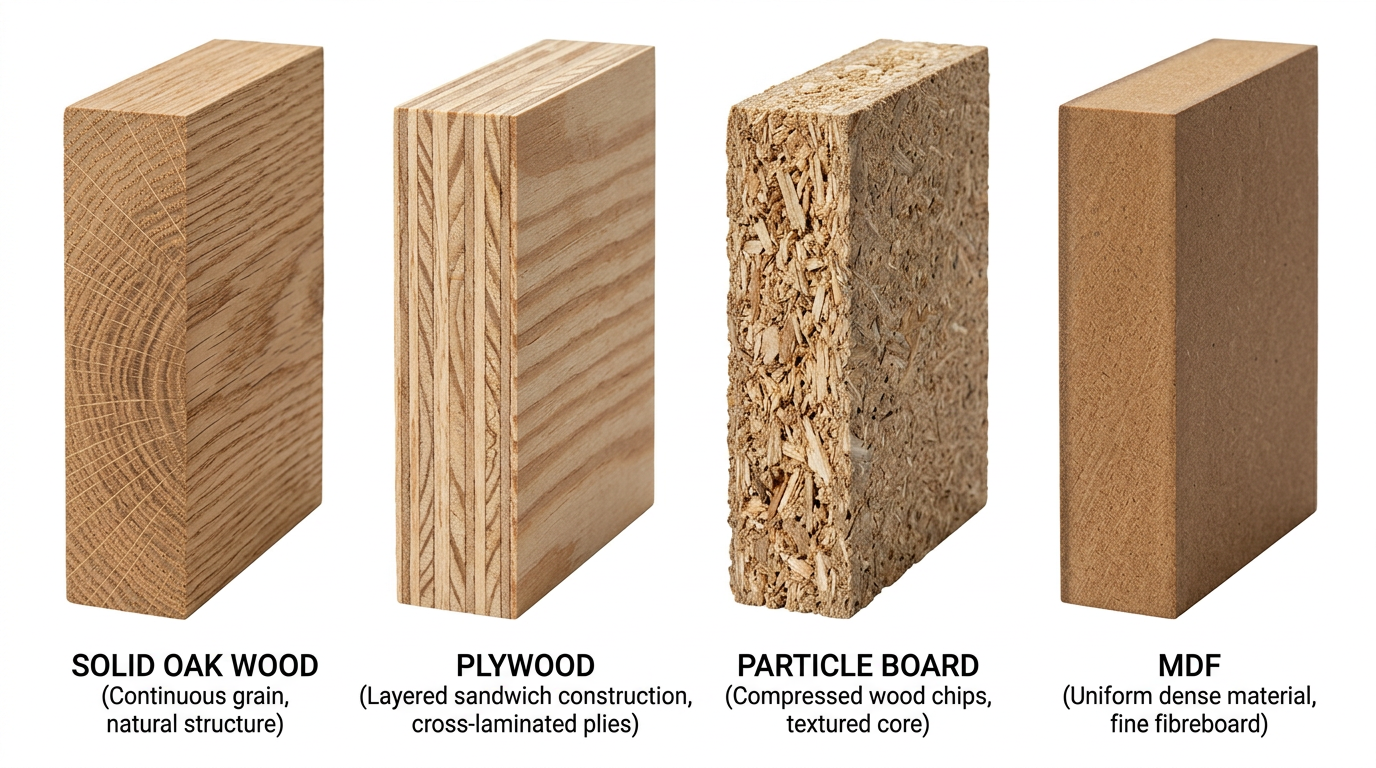
Cross-section comparison of wood types
The Weight Test — Real Wood is Heavy
Solid wood furniture is noticeably heavier than its laminate equivalent. Pick up a drawer or try to lift one end.
- Surprisingly heavy? Likely solid wood or high-quality plywood. Old-growth hardwoods are dense.
- Light for its size? Likely particle board or MDF with laminate surface.
- Medium with hollow knock? Could be frame with thin panels — check other tests.
A solid wood dining chair: 15-20 lbs. A laminate equivalent: 7-10 lbs. You'll feel it.
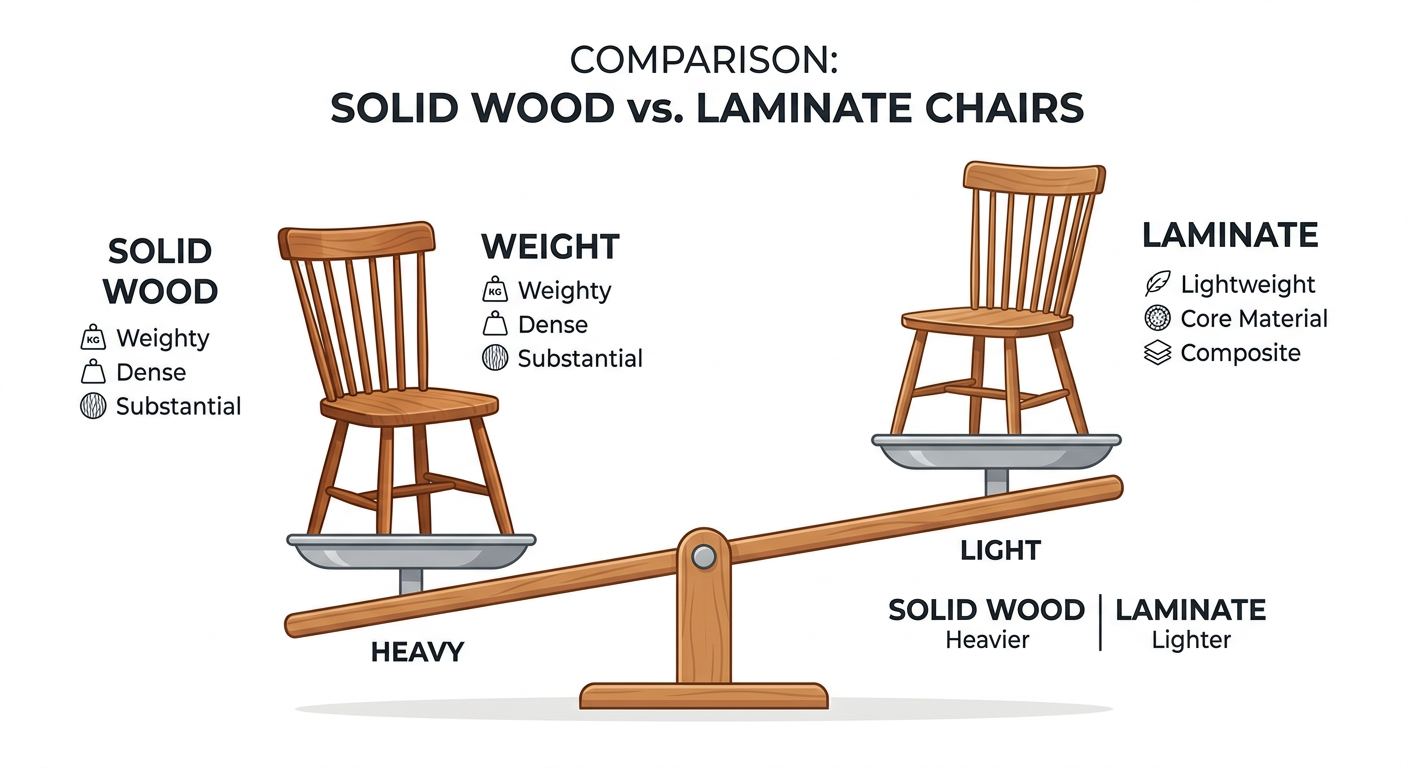
Weight comparison between solid wood and laminate
The Knock Test — Listen to the Difference
Knock on the flat surface with your knuckles. The sound tells you what's inside.
- Solid, dense thud: Solid wood. Similar to knocking on a cutting board.
- Slightly resonant thud: Plywood or quality construction.
- Hollow echo: Thin panel over air gap. Common in cheap furniture.
- Flat, dead sound: MDF or particle board with laminate.
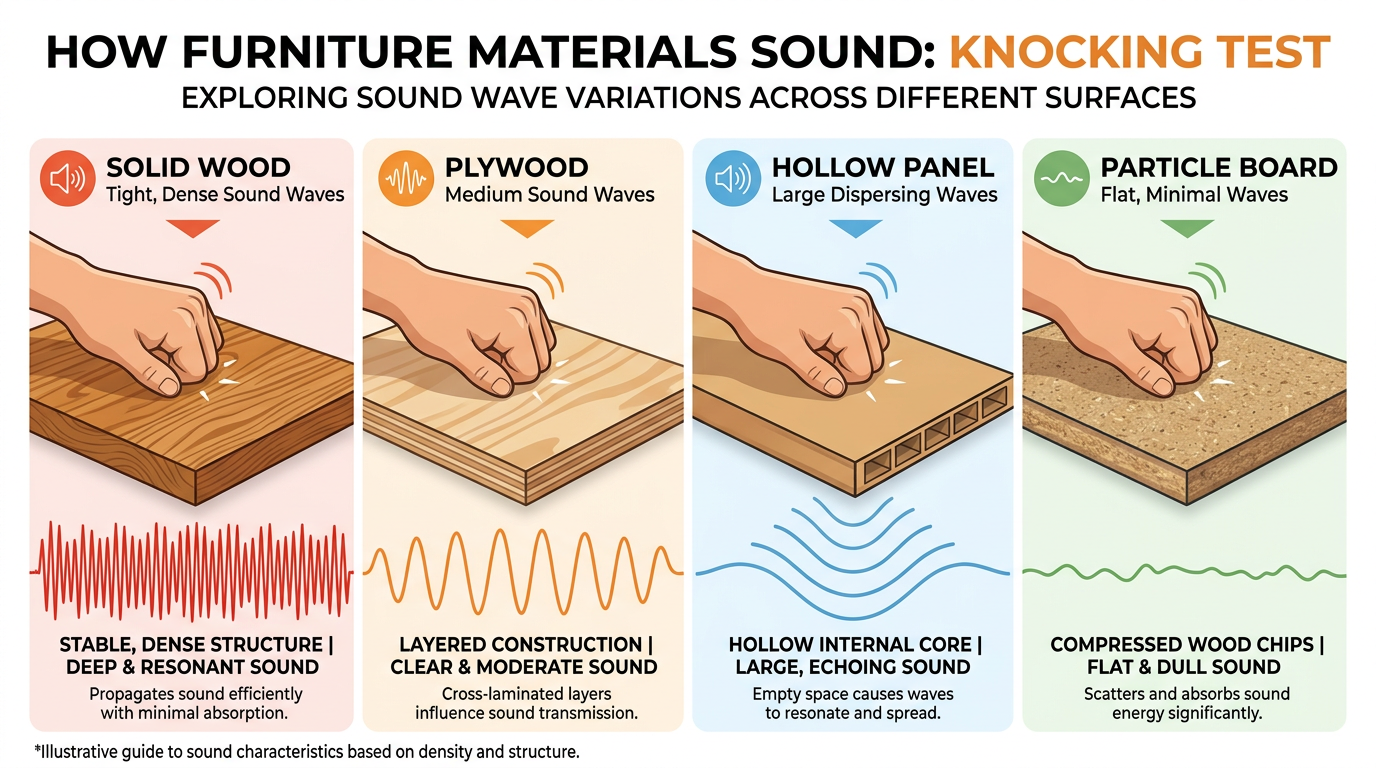
Knock test sound comparison
The Scratch Test — Find a Hidden Spot
Only do this on a hidden spot — underside of shelf, back of leg, inside drawer. Use your fingernail or a coin.
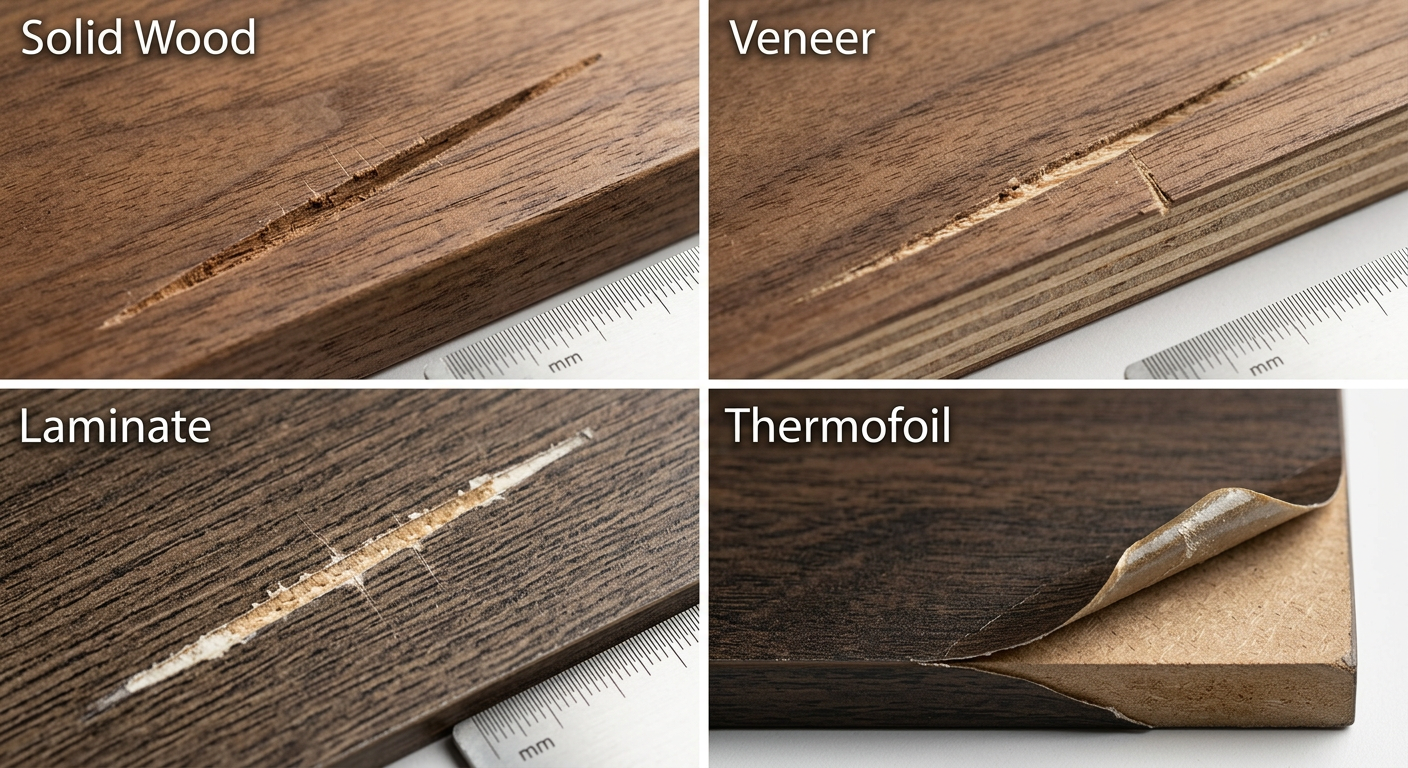
- Solid wood: Scratching reveals more wood underneath. Color and grain continue.
- Veneer: Very thin layer of real wood over a substrate. Scratch through and you hit different material.
- Laminate: Reveals white or brown paper/resin layer. The "grain" is literally a photograph.
- Thermofoil: Surface may peel or lift. It's a plastic film heat-wrapped around MDF.
Important: Veneer over plywood is NOT cheap furniture. Many antiques use veneer.
Scratch test results on different materials
The Grain Pattern Test — If It Repeats, It's Not Real
This test you can do from across the room.
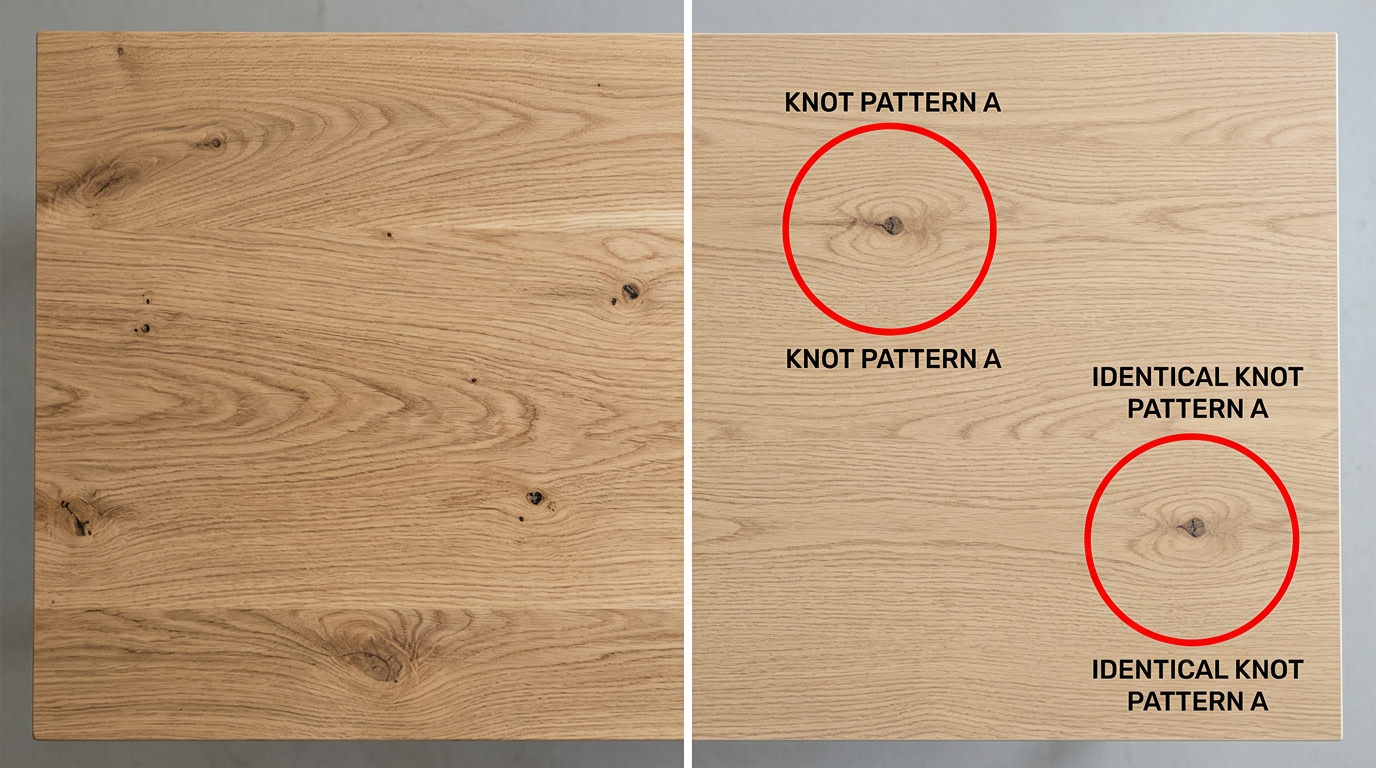
Real wood grain is unique. No two boards have the same pattern, ever. Laminate uses a printed photograph — manufacturers repeat the same images.
- How to check:
- Stand back and look at the overall surface
- Look for repeating patterns — same knot, same swirl, same streak
- Check if multiple drawers have identical grain patterns
- On table tops, look for a seam where the pattern starts over
Real wood vs laminate grain comparison
You've Identified It — Now What?
- Solid hardwood — Almost always worth saving. Route to resale, consignment, repair. Value: $50-500+
- Solid softwood (pine, cedar) — Worth saving if sound. Route to resale, donation, repurpose. Value: $20-150
- Veneer over plywood — Often worth saving, especially mid-century. Can be repaired. Value: $30-300+
- Veneer/laminate over particle board — Functional value only. Donate if good, dispose if damaged. Value: $0-30
- Laminate/thermofoil over MDF — Similar to particle board. Donate if functional. Value: $0-20
Sacramento note: Habitat ReStore on Stockton Blvd accepts solid wood furniture but will not take particle board. Knowing the difference saves wasted trips.
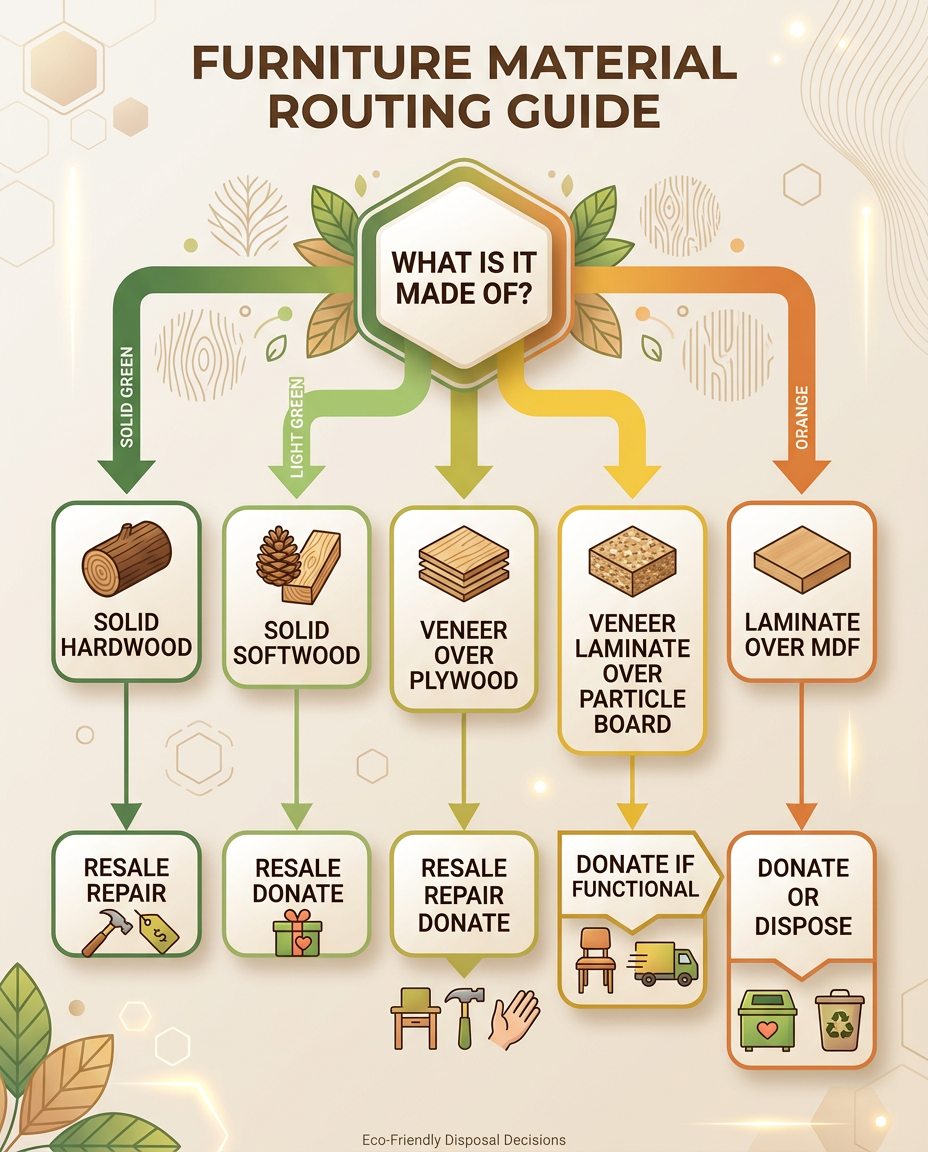
Material routing flowchart
Practice Challenge — Try It Right Now
Find a piece of furniture in your home — bookshelf, dresser, desk, nightstand, chair.
- Run through all five tests:
- Edge test — What do you see?
- Weight test — Heavy or light?
- Knock test — Dense thud or hollow echo?
- Scratch test — What's under the surface?
- Grain test — Does the pattern repeat?
Share your result: Post a photo with your identification to @UpcycleHub with #MaterialID. We'll confirm or correct!
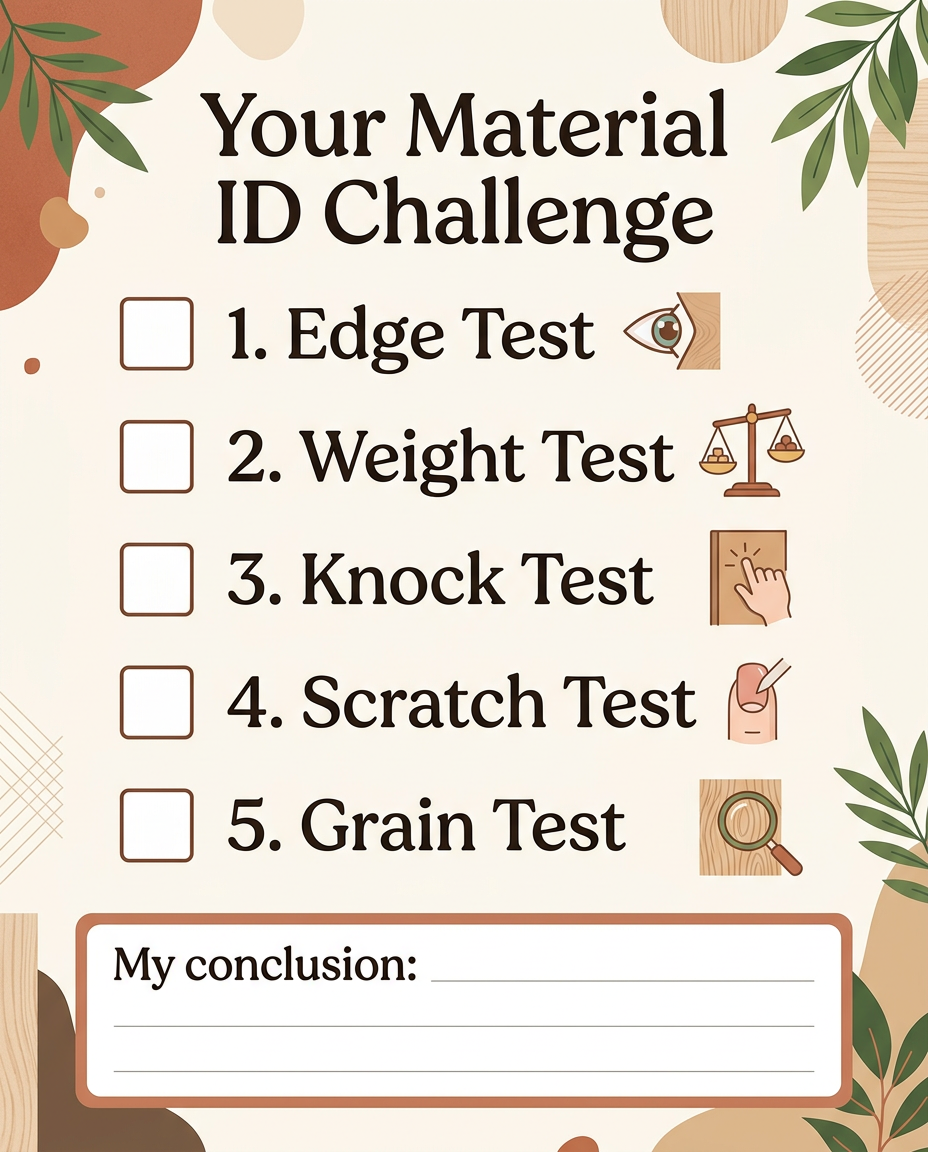
Material ID challenge checklist