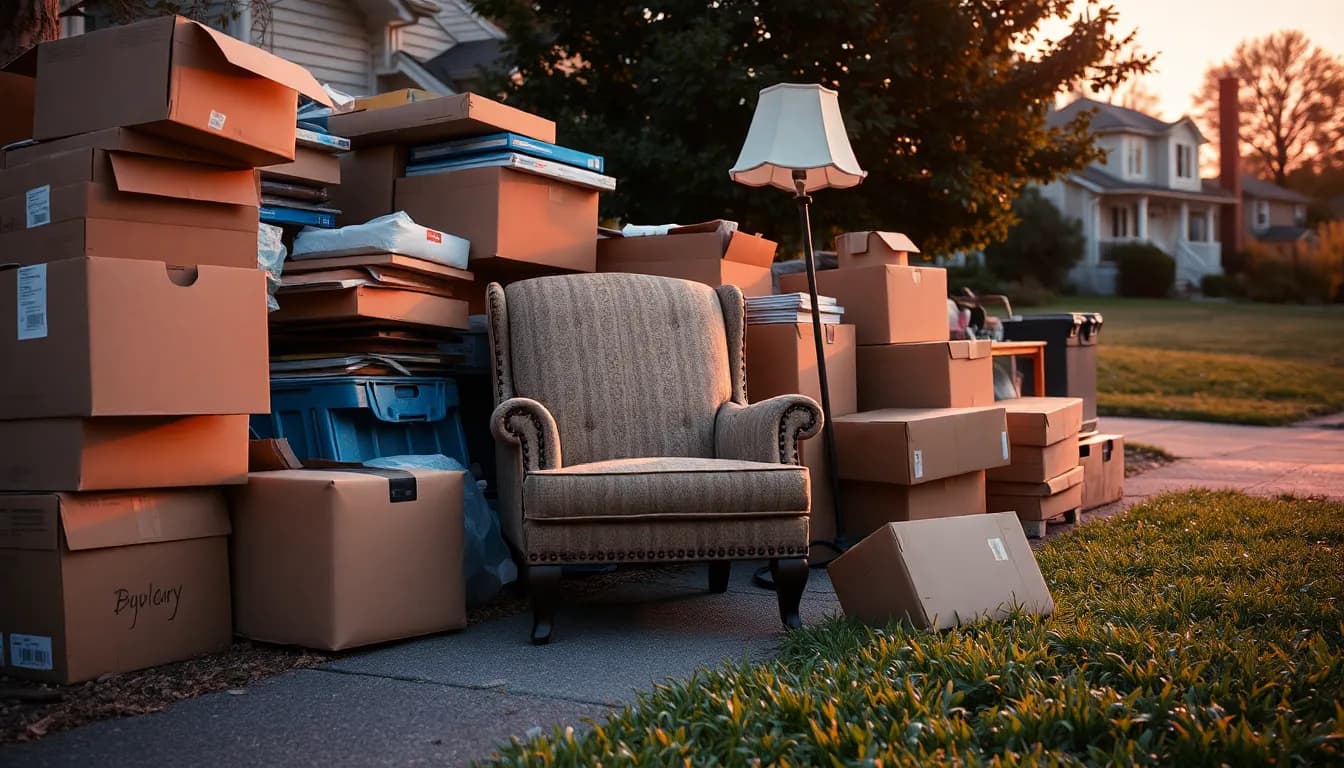
Kosti Shirvanian built Western Waste Industries over thirty years in Southern California, selling it in 1995 to USA Waste Services for $510 million. He started again with Waste Resources, serving cities like Glendale and Gardena for decades until recently announcing another sale—once again to a company tracing back to USA Waste, now merged with Waste Management as North America's largest trash hauler.
This pattern repeats across America: small waste and junk removal company owners are selling at unprecedented rates. However, the buyers have changed. Rather than just the major public waste companies, private equity funds flush with capital now dominate acquisitions, targeting recession-proof businesses offering stable returns.
What disappears alongside competition is a business model itself—the owner answering his own phone, the driver knowing neighborhood specifics, the institutional knowledge built over decades being replaced by routing algorithms and distant call centers.
The Holdout
Danny Reyes, age 43, operates Central Valley Hauling outside Fresno, California, a business his father started in 1987 with a single truck. The company generates approximately $2.8 million annually and employs eleven people.
Since 2023, private equity offers arrived via email, phone calls, and in-person meetings. One offer came at 4.2 times EBITDA—a term Reyes didn't initially understand. A former competitor who recently sold to a Chicago-backed fund now owns a boat, appearing happy with the transaction. Yet Reyes worries about what happens when decision-makers lack route experience and on-the-ground knowledge.
I used to compete with guys I knew. Now I'm competing with spreadsheets.
The Money Finds a Home
The American waste collection industry represents an $86 billion market employing 286,000 people across nearly 20,000 companies. The top three public companies control roughly half the residential market—but thousands of small regional operators remain.
Private equity views this fragmentation not as a problem but as opportunity. Elazar Guttman of Sidley Austin notes waste has become an attractive investment sector. The appeal is straightforward: trash collection is counter-cyclical, municipal contracts provide recurring revenue, franchise agreements create local monopolies, and modest capital requirements compared to other industries make it appealing when investors grow cautious.
These are family businesses from the 1970s and 80s—three to ten truck fleets built by entrepreneurs who saw opportunity in America's growing consumption. Now they're seeing opportunity in exit.
The Ecowaste Solutions Deal
In January 2026, Kinderhook Industries announced forming Ecowaste Solutions, backed by a $1 billion continuation vehicle funded by Goldman Sachs Alternatives and Apollo. The company immediately began acquiring small haulers across the South and Midwest. Within one month, three deals closed in Kansas, Oklahoma, and Texas.
We anticipate doubling business size within three years.
The message to small operators is clear: sell now, or get squeezed later.
The Spreadsheet and the Sledgehammer
The PE acquisition playbook is straightforward: identify fragmented regional markets, acquire a "platform" company (typically the largest independent operator), then roll up smaller competitors—usually businesses under $10 million annual revenue.
A hauler clearing $1 million annual profit might receive $4-6 million at sale. For owners who've spent decades building their business, the math is compelling—especially when the alternative is competing against well-capitalized consolidators.
Many have watched peers complete significant exits and make noticeable lifestyle shifts. The combination of operational fatigue and the psychological pull of those 'greener pastures' is contributing to more owners exploring a sale.
The Efficiency Trap
After acquisition, PE funds typically hold businesses for three to seven years before selling or going public. During this window, value increases through revenue growth, cost-cutting, and continued acquisitions. The end game is "densification"—reducing regional competition until the combined entity commands pricing power.
When local haulers get rolled up, new owners inherit contracts but lose institutional knowledge—which customers actually recycle, which ones contaminate streams, which items could find second lives. This knowledge walks out the door with former owners.