America has a third space problem. The places where neighbors used to run into each other — the barbershops, the diners, the community centers — are disappearing. And at the same time, we're throwing away 12 million tons of furniture every year.
What if the stuff we throw away could become the place we've been missing?
That's the Upcycle Mall. Not a store. Not a warehouse. A community center powered entirely by donated materials — where the things you don't need become the infrastructure someone else does.
Two Problems, One Building
12 million tons of furniture discarded annually. $39 billion worth of goods sitting in storage units.
On one side, communities are losing the places where people actually connect. On the other, a river of perfectly usable stuff flows straight to the landfill because nobody built the system to catch it.
The Upcycle Mall catches it. Every item that enters has the potential to become part of the Mall itself — the tables in the café, the shelving in the workshop, the display cases in the marketplace. The building literally grows from what people give away.
How It Works
Materials enter through multiple channels: a smartphone app for scheduled pickups, a no-appointment drop-off zone, community donation drives, and partnerships with businesses generating material streams.
Everything gets sorted into streams:
The Materials Lab
This is where the magic happens. Specialized stations process what can't be resold: glass crushing, textile shredding, wood chipping, electronics harvesting, metal sorting, paint remixing.
Inspiration comes from organizations like Glass Half Full in New Orleans, which has diverted over one million pounds of glass from landfills by crushing it into sand and aggregate for coastal restoration. That's not recycling — it's reimagining what a material can become.
Twenty Workshop Zones
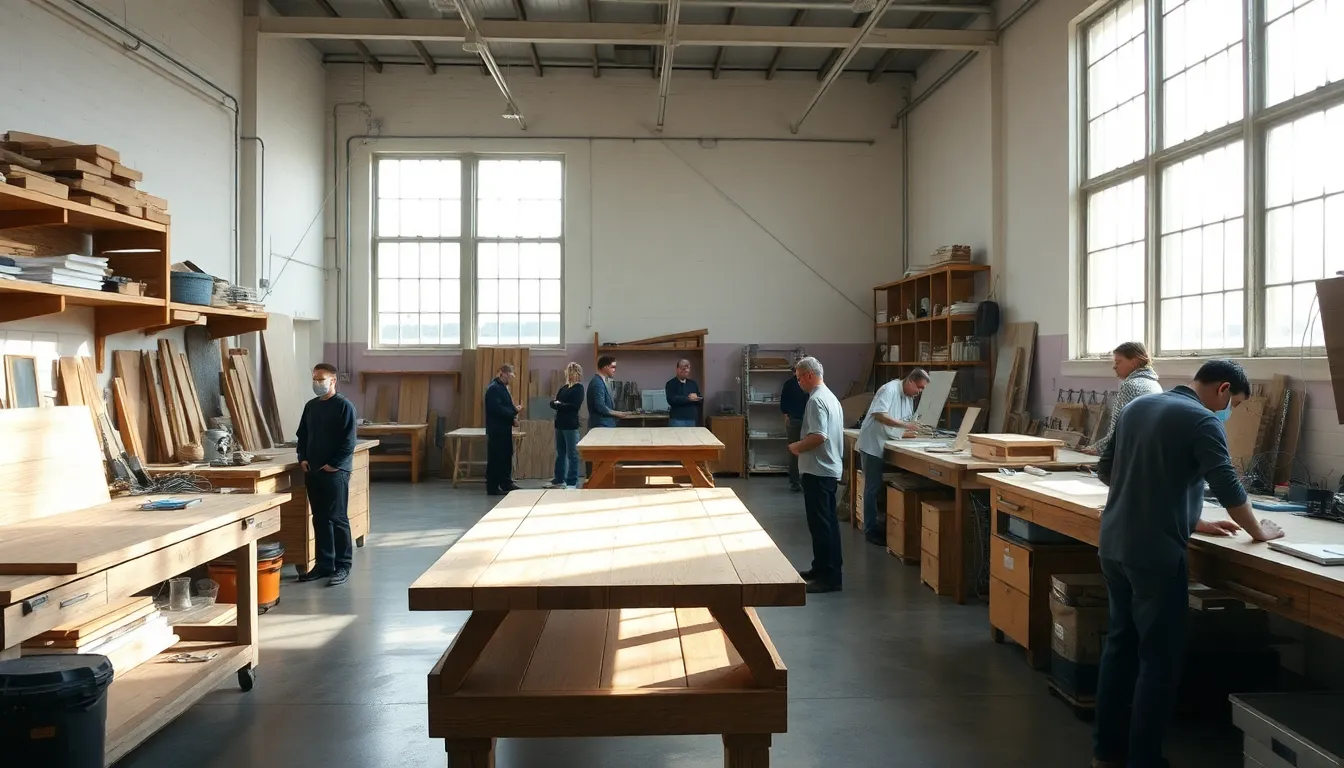
The Mall contains over twenty distinct maker spaces, all powered by recovered materials and donated tools:
Plus ceramics, 3D fabrication, bike repair, automotive basics, screen printing, and more. Every workshop uses materials that would otherwise be in a landfill.
You don't need to buy supplies. You come in, choose from what's been donated, and build something. The materials are free. The skills are what you take home.
Community Infrastructure
The workshops are just one layer. The Mall is designed as full community infrastructure: